Wednesday, 31 May 2017
Fourth Game review: Jail Break
Story: The narrative in the game is simple and has a structure so the consumer is easily intrigued and drawn into the game. The main character is a prisoner that is attempting to escape from jail whilst trying to avoid the guards in order to get outside of the prison. You win the game when you have escaped from the prison and you have achieved freedom. It is a classic jail break game and the story is very easy to understand so the consumer is able to have a sense of purpose and understand what they are fighting for. Because it would make no sense just to fight a whole bunch of guards just to see what happens next.
Note: It would be best for games to have a structure so the consumer actually understands the goal and purpose of the game.
Art: The art in jail break is very basic, you have your steel walls and moldy green bricks and just the main character as a built prisoner with a plain singlet and pants. The design of the character and walls are also simple and are easy to classify as brick walls, steel and the player. The colors are pretty drained which suggest a dull, dreary and dead facility and the green walls also appear like mold so the prison appears to be in poor shape.
Game-play: The game play is that of your average platform game and consists of arrow buttons and the space bar for actions. Because of this I am assuming that my game would have to have these controls. There were a few guards but they were pretty easy to beat (Obstacles must pose challenges) and there were no other objects in my way so passing the game was a breeze

Tuesday, 30 May 2017
Third Review: Forest Marathon
Story: Forest Marathon features a girl main character outdoors exploring the average platform world in search of acorns. The structure consists of her starting out in a suburb illustrated level in which she searches for five acorns to pass. She progresses through each of the levels until the end when she stumbles upon the ultimate "Giant Acorn". Although there is a middle and end to the narrative, as to where the story starts is not very clear. Maybe her start was the controls and objective introduction however it was also not clear as to why the consumer should care about getting the acorns until the last level (when you see the huge acorn). It is also refreshing how the game features a female protagonist rather than the female side character.
*Note: I should make my structure and reasoning for my game are clear, although I did notice that the middle of the narrative is the attention holder so I need to keep that in mind.
Art: The art appears very grid-like, as if there was a glitch in the program. This makes the game appear incomplete but also replicates a Supermario Bros image. The visuals are able to appeal to a younger audience due to it's simple outlook in contrast to older consumers which prefer a more realistic diegesis. The colors are simple and bold which suggest that the game has a straight forward and simple approach. These bold colors are fine but it is also in danger of being so simple that it may fail to maintain the consumers attention. I am considering bright, bold and neon colors for my game design as these colors may attract the eye more. However I do not want the audience to be overwhelmed with the color so I will try to avoid over doing the colors. Although, because the characters and background are simple it is simpler for the audience to understand and keep up with the story.
Game-Play: The game play is also consistent with your average platform game. With the arrow buttons for movement and the space button to jump, it appears that the majority of platform games retain these controls for the game play. There were no antagonists and the jumping could use some work as the protagonist jumps it looked like I could fly. With my game, I will attempt to make the movements in the game-play clear and well executed to minimize gaming confusion
Monday, 29 May 2017
Second Game Review: Super Bounce


Story: Simply put, Super Bounce has no narrative and the aim of the game is to basically get more points than your opponent. There is no structure and the game is similar to another game called ping-pong where the objective is to not let the enemy score in your goal. Except in Super Bounce you are your offense and defense. Super Bounce just appears to be a game which provides the consumer with entertainment and escapism, it also looks to be a game that you play in an office since you could be mistaken for reading the screen (following the ball) instead of playing.
Art:
The art in Super Bounce is also very mundane, there is a pale purple/grey background and the players (you and the computer) actually look like medicine capsules with grey in the middle and the two ends of the capsules being blue (player 1) and red (player 2). These capsules could be trying to imitate a battle in space with space capsules shooting at each other so much that the bullets just seem to merge into one ball. The red capsule symbolizes an enemy and the blue capsule is the consumer. Normally the colors red and blue were used to show an everlasting rivalry/battle between two main forces, the speculating, calm, collected and cold blue clashing with the powerful, fiery, passionate and raw red,. Due to the disposition of these colors in society being complete opposites it suits a game with two opponents clashing rather than multiple forces.
Game-play:
The game-play in Super Bounce is similar to that of your average platform game. With the arrow buttons moving the capsule left and right the game Super Bounce is a relatively easy game to play and understand across various age groups. An easy game-play is seemingly important in a game as the game is able to attract consumers from a wide range of age groups and cultures. Therefore, the simpler the game-play, there is a better chance of attracting more consumers towards your game. Although it is wise to keep in mind that a simple game-play is common so the chances of your game standing out rely on the art and story collaborating with the game-play.
The game-play in Super Bounce is similar to that of your average platform game. With the arrow buttons moving the capsule left and right the game Super Bounce is a relatively easy game to play and understand across various age groups. An easy game-play is seemingly important in a game as the game is able to attract consumers from a wide range of age groups and cultures. Therefore, the simpler the game-play, there is a better chance of attracting more consumers towards your game. Although it is wise to keep in mind that a simple game-play is common so the chances of your game standing out rely on the art and story collaborating with the game-play.
Friday, 26 May 2017
First Game Review:
Newton's Hidden Object Game
Story:
The narrative of Newton's Hidden Object Game is pretty simple, the story sets back in 1666 and the background information is displayed on an old paper parchment. The paper tells the consumer the aim of the game and has a short sentence or two about the purpose of the game. In a nutshell, back in 1666 London is in danger of burning down and the consumer has to help Isaac Newton find and collect five items in three levels. You then find the items and it is assumed that he is safe although it wasn't made very clear. It was unfortunate that the story built up my expectations so much by illustrating a difficult quest that appeared to require strategy or even an eye for detail however it was the game-play that let the game down. The short summary of the game was engaging and due to the fact that it was brief it was easy to understand it encourages the consumer to play the game.
Art:
The art in Newton's Hidden Object Game reminded me of old fairy tale book illustrations. With old-fashioned characters and classic writing on a torn worn out paper scroll, it is easy to believe that this game was set in 1666. The use of a cartoonish animation, leads the consumer into a fictional world of history enabling the game to appear realistic however it is crystal clear that this world is of fiction. The art is interesting and appeals to a variety of ages as it appears both animated,unique and realistic. As if the art in the game would be the animated version of 1666 it is effective in attracting the eye and it is interesting how aspects of light such as a candle or even the fireplace are animated so that it appears to be flickering in the night. However it is not clear if there is still a fire in London as you do don't see any of the characters in panic or any traces of a fire outside windows.


Game-play: The game-lay failed to engage the consumer as the objects that needed to be found were obvious and I failed to find any challenges that the game had to offer. The controls were just a matter of clicking the object on the screen then moving on to find the next object. However, because the objects were easily found the game proved too simple than what was expected. As it was so simple it didn't pose any challenge whatsoever which did not effectively grab at the consumer's attention and had an impact on the amount of entertainment that a game is expected to provide.
Games must have challenges for the consumers in order for them to learn and progress.
Newton's Hidden Object Game
Story:
The narrative of Newton's Hidden Object Game is pretty simple, the story sets back in 1666 and the background information is displayed on an old paper parchment. The paper tells the consumer the aim of the game and has a short sentence or two about the purpose of the game. In a nutshell, back in 1666 London is in danger of burning down and the consumer has to help Isaac Newton find and collect five items in three levels. You then find the items and it is assumed that he is safe although it wasn't made very clear. It was unfortunate that the story built up my expectations so much by illustrating a difficult quest that appeared to require strategy or even an eye for detail however it was the game-play that let the game down. The short summary of the game was engaging and due to the fact that it was brief it was easy to understand it encourages the consumer to play the game.
Art:
The art in Newton's Hidden Object Game reminded me of old fairy tale book illustrations. With old-fashioned characters and classic writing on a torn worn out paper scroll, it is easy to believe that this game was set in 1666. The use of a cartoonish animation, leads the consumer into a fictional world of history enabling the game to appear realistic however it is crystal clear that this world is of fiction. The art is interesting and appeals to a variety of ages as it appears both animated,unique and realistic. As if the art in the game would be the animated version of 1666 it is effective in attracting the eye and it is interesting how aspects of light such as a candle or even the fireplace are animated so that it appears to be flickering in the night. However it is not clear if there is still a fire in London as you do don't see any of the characters in panic or any traces of a fire outside windows.


Games must have challenges for the consumers in order for them to learn and progress.
Sunday, 21 May 2017
Learning From A Pro
On Wednesday the 17th of May 2017, my Level 3 Media Studies class had the opportunity to get an interview with Jonathan Cummings. Jonathan is an independent indie game developer, which means that he both self-finances the games he creates with no support from big corporations and the games all come from his own creativity and his original ideas.
It was pretty nerve-wracking to be interviewing a real game developer (one that created the virtual reality game Protonwar no less) but after we settled into the interview my interest in the production of gaming and a deeper appreciation for game developers continued to grow.
It was cool, I really like how passion and creativity is the main driving force behind developing a game and not the technology, nor game codes or even great computer skills, although he did say that learning some of these could be helpful it isn't what really matters when creating your own game. It's nice to know that there are many occupations that serve as a creative outlet.
With his game Protonwar, Jonathan Cummings was saying that staying motivated is a personal challenge that creators might come across. This would be a good thing to keep in mind when creating a game because if the creator is bored then the audience is bored (it makes sense). So maybe try to keep a cool head when creating a game, as passion flowing in the brain is good but an overload of excitement will get old fast. It is also worth while noting that when you make games you should not expect a lot of money because financially in this industry you might just only have creativity and a will to finish the game supporting you as creating a game does not appear to be a path for materialistic gains.
Other challenges we also talked about were the challenges/barriers he had with creating the game and although I should have expected it (I was still surprised) one of the challenges when creating a game was actually marketing. Now that I think about it the competition and that the amount of indie games out there is quite numerous it would be hard getting noticed and standing out. As larger companies have marketing teams that specialise in advertising games, indie gamers in comparison usually do their own marketing but with the competition being as high as it is and the challenge of creating a unique and compelling game is hard enough, most indie game developers focus on completing the game and then advertise it.
Cummings also confirmed for us that gaming can indeed assist in learning/education. Skills like problem solving, memorisation and an improved reaction time are gained through gaming and so the consumer would actually be picking up new skills while they play and not wasting time despite common belief (he did say his own problem solving skills improved through gaming LOL).
I also learnt that it is important to constantly exercise or have some method available to relieve stress as when working in the gaming industry many creative developers suffer from stress and some will suffer from depression. With irregular sleep hours and constantly doing individual work Jonathan expresses how it is important to always talk about your problems and not keep it bottled up because it might get worse.
Being the creator of your own game honestly appears to be quite fun even if you have to deal with a lot of stress and maybe even struggle with finances. From what I learnt from Jonathan being an indie game developer has it’s ups and downs but then again everything does and it also seems like a great experience. I mean being able to actually bring figments of your own imagination to life inside the gaming world is pretty amazing. Although the stress of being able to sell your game to gain some income and with the anxious mindset of finishing the game and getting people to play isn't one that many people can handle. However, although there are risks with this lifestyle there is no sense in turning away from doing what you enjoy. If you are able to enjoy creating a game to the fullest then the risks will either seem not that bad or they will be seen as necessary to develop an awesome game. I admire indie game creators for continuing to create games just because they simply love doing it and their commitment to their work is 100% or else their game wouldn't fly.
This is a good lesson to keep in mind as not all careers and/or educational pathways solely rely on academics and that although the possibilities are slim there are opportunities in a more creative industry available, you don’t always need amazing grades to succeed just strong passion and a goal for what you want to achieve.
It was a good interview and I learnt a lot that I am determined to integrate into my game. Although I was nervous for the first interview I actually look forward to gaining more expertise/knowledge about developing a game and the gaming world in the next interview. So a big Meitaki Maata to Jonathan Cummings from me in the Cook Islands for giving us some of your time and talking with us and to make us smarter with your knowledge #appreciateit.
P.S: I am defs looking forward to picking your brain during the next one (I wanna try asking questions that put you on the spot now :D)
Sunday, 14 May 2017
Flow Review
Summary: Flow is a game about a little organism drifting in the depths of the sea trying to survive by eating other creatures and becoming stronger. You control an aquatic organism and lead it through each level which then takes you deeper and deeper into the oceans atmosphere. This is a good concept to keep in the back of my head when I try to design my own game. The theory of taking the character deeper and deeper into the story/ into the unknown #interestingthought.


How would you describe the visuals in Flow?
The visuals in flow are very interesting, the use of bright neon colors for both the organisms and the background are really striking and are effective for attracting the consumers attention.
The neon coloring seem to take on a sci-fi type of vibe however with the character's (if you can call the organism that) design being almost old-fashioned alien hieroglyphics/symbols connected and alive, it is really intriguing how the futuristic coloring is combined with simple but graceful artwork. It appears as if the color choice and character design are one of the main reasons why people might play this game. Think about it, you go from a small and insignificant organism to an almost almighty and god-like creature. Although the creator could also be recreating realistic deep sea creatures character as creatures in the dark depths of the ocean also have plain exteriors with glowing neon aspects on their bodies. And like these creatures the neon glow of the characters also attract the consumer to the game.
 |
| example of a deep sea creature |
 |
| example of the Flow character |
The sound in Flow appears (if sound can do that) sort of twinkly,majestic and elegant as if it is introducing an adventure or journey in which it is ok to move at your own pace. Similarly the sound assists in the creators purpose in trying to create a game in which the difficulty changes in accordance with the players' skill level. The elegant sparkly and majestic sound in the game does this by also providing the consumer with a calmer sense of time, the sound helps the player forget where they are and encourages them to dive into the game. When I played the game without sound, I wasn't entertained as much and I couldn't escape into the game easily but when sound was included with the game it became less of a chore to play #thesoundwasprettyrelaxing. http://jenovachen.info/foundation
However although the visuals were impressive and the sound was useful, how the game is played was a let down. To play the game you would pilot the organism through the deep sea using your mouse to control the direction and the space bar or the left mouse click button in order to increase the speed of the organism. As the controls are simple the game is easy to play, however the actions to control the organism are so easy and the lack of obvious villains (or any villains at all) let down the game. In Flow the consumers are given the opportunity to control their game (progresshttp://jenovachen.info/implement-flow/). Although because the game is so relaxed and so "go with the flow" the consumer loses track of who they even are in the story which becomes a problem as the complete lack of roles in the game leave the player confused as they have no purpose, no reason to carry on, no motive to complete the level if you don't even know who you are in the game. I can now see how identity and narrative are important to a game as without it, the game has no structure and the consumer cannot identify the game's genre(*Note: I will try to include a narrative in my game).

Flow challenges our ideas of what a fun game is by creating a world were fun is were you lose track of time and defeat enemies that are at your level.
"When the challenge is greater than our abilities, we become anxious and potentially dead. When the challenge is significantly less than that of which we are worthy, we become bored, and potentially dead."
http://www.jenovachen.com/flowingames/flowtheory.htm
Although if there is nothing pushing the consumers limits or if the challenges are within their abilities and become predictable the player could lose interest.
From Flow I learnt how if you float through every day life and do challenges that are within your limits life will get boring and predictable. However I can understand how biting off more challenges than you can chew is a destructive and reckless way to live and that any type of media that lacks some sort of narrative isn't very engaging. Flow just appears to be a game where you have to be very chill and have nothing else to do to play and thoroughly be entertained. The idea of Dynamic Difficulty Adjustment is also an intriguing idea when applied to gaming and when creating my own game I will keep this concept in mind.
The game Flow, can also be connected with society and how we choose to progress to each stage by either jumping in or testing the waters first and the level of challenges that arise faced are the results of these choices of how to progress to the next level of our lives. How strong you are in each stage also reflects on the hardships experienced. Maybe because subconscious links between real life and the progress of the game are made, it is possible for the consumer to become bored due to these links that are made in the back of their heads as in their heads they'll have already been through this before.
Flow game trailer
https://www.youtube.com/watch?v=D5YPMU5dFJA
Tuesday, 9 May 2017
My Developing understandings around gaming genres:
How to classify genres in gaming?
From my understanding, there are a lot of genres that are used in gaming and because of this a number of codes and conventions are in place so that it is easier for us as consumers to identify these genres. "Video game genre study differs markedly from literary or film genre study due to the direct and active participation of the audience." (The Medium of the Video Game).
In order to classify a genre it is best to find conventions that are typically used to convey a certain genre i.e. action or horror .
For example typical horror genre conventions would be the use of dark, dim lighting and creaky, eerie noises whereas an action type genre would have guns shooting, bombs going off and a lot of running and jumping around (basically no staying still) would be typical of an action genre.
What are some of the challenges?
However although it is useful that genres can be classified through the identification of multiple conventions, the world both virtual and reality are not so black and white. Complications occur when genres begin to overlap each other making it harder to identify a specific genre and may result in sub-genres. "....and the fact that genres are always in flux as long as new works are being produced...." I am then assuming that as more genre types are be invented due to the never-ending creativity of society, there would be more confusion, debates and maybe interests in the identifying of such genres.
Using Mark J.P Wolfs understanding summarize:
Platform- This is a genre in which the player is displayed as a 2D character in a 2D world and the goal of the game is to make it pass many levels while the character is controlled and collects items, rewards and even fights monsters in order to progress. "Characters and settings are seen in side view as opposed to top view..." (The Medium of the Video Game).

- Escape: These are games where the goal is to actually escape from pursuers or maybe even escape from a room or they are trying to get out from some type of enclosure. The player is either being constantly pursued or is just trying to find the necessary keys or objects needed to escape from the room. These games usually end when the player escapes from the room, the player escapes for a period of time but succumbs to the end or the player is able to avoid pursuers by entering a safe place. Note: the character is only escaping from something/someone and is not battling anything.
- Strategy: This type of genre focuses on the sole use of strategy(lol) in order to either advance to the next level or win the game. These games do not require the use any fast paced action or combat as they aren't necessary to win the game. However games that use strategy and also incorporate the use of combat(action), dark lighting(horror) or even fast reflexes(more action) would be categorized as sub-genres and would not count as a typical strategy game as there is more to winning the game than just a strategy i.e. fast reflex or good hand-eye coordination. Because there is a collaboration and crossing over of more than one genre it would not solely count as a Strategy genre.

How to classify genres in gaming?
From my understanding, there are a lot of genres that are used in gaming and because of this a number of codes and conventions are in place so that it is easier for us as consumers to identify these genres. "Video game genre study differs markedly from literary or film genre study due to the direct and active participation of the audience." (The Medium of the Video Game).
In order to classify a genre it is best to find conventions that are typically used to convey a certain genre i.e. action or horror .
For example typical horror genre conventions would be the use of dark, dim lighting and creaky, eerie noises whereas an action type genre would have guns shooting, bombs going off and a lot of running and jumping around (basically no staying still) would be typical of an action genre.
What are some of the challenges?
However although it is useful that genres can be classified through the identification of multiple conventions, the world both virtual and reality are not so black and white. Complications occur when genres begin to overlap each other making it harder to identify a specific genre and may result in sub-genres. "....and the fact that genres are always in flux as long as new works are being produced...." I am then assuming that as more genre types are be invented due to the never-ending creativity of society, there would be more confusion, debates and maybe interests in the identifying of such genres.
Using Mark J.P Wolfs understanding summarize:
Platform- This is a genre in which the player is displayed as a 2D character in a 2D world and the goal of the game is to make it pass many levels while the character is controlled and collects items, rewards and even fights monsters in order to progress. "Characters and settings are seen in side view as opposed to top view..." (The Medium of the Video Game).
- Escape: These are games where the goal is to actually escape from pursuers or maybe even escape from a room or they are trying to get out from some type of enclosure. The player is either being constantly pursued or is just trying to find the necessary keys or objects needed to escape from the room. These games usually end when the player escapes from the room, the player escapes for a period of time but succumbs to the end or the player is able to avoid pursuers by entering a safe place. Note: the character is only escaping from something/someone and is not battling anything.
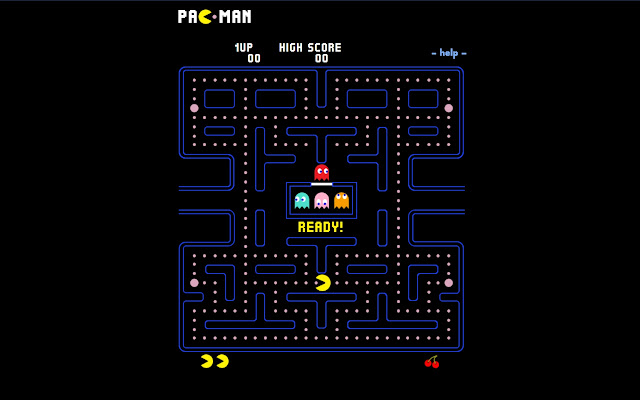 |
| Example 1: Pacman |
 |
| Example 2: Escape room |
- Strategy: This type of genre focuses on the sole use of strategy(lol) in order to either advance to the next level or win the game. These games do not require the use any fast paced action or combat as they aren't necessary to win the game. However games that use strategy and also incorporate the use of combat(action), dark lighting(horror) or even fast reflexes(more action) would be categorized as sub-genres and would not count as a typical strategy game as there is more to winning the game than just a strategy i.e. fast reflex or good hand-eye coordination. Because there is a collaboration and crossing over of more than one genre it would not solely count as a Strategy genre.
Monday, 8 May 2017
Game Research-"Scary Girl" by Nathan Jurevicius
http://www.scarygirl.com/world.php
Write a post about your impressions of Scary Girl as a game. Here are some questions to help you.
How would you describe the art in Scary Girl?

The art in Scary Girl is intriguing as it is a mix of colors that have dark fades, bright hints or even a combination of both. The use of these colors gives the consumer both a sense of fear and a sense of curiosity about this new world. This is due to the mixture of colors being used typically in horror and fantasy type genres i.e. dark dull lighting and faded colors that shows world in corruption is integrated with more bright colorful lighting. There are also some large characters with sharp teeth being outlined with a yellow type of glow mimicking some kind of superior/mystical figure that is usually seen in many fantasy genres whereas the darker coloring and big characters with sharp teeth are typically seen in horror genres. The artwork in the game is 2D and appears to be a typical cartoon type of animation. However I like how it shows an interesting combination of both horror and fantasy genre through the use of the lighting and color scheme I also like how usually intimidating characters and scenes appear less so, due to the collaboration of both horror and fantasy conventions. Which in turn draws your attention into the game by giving the consumer that sense of fear but also the consumer is plagued by curiosity as usually intimidating characters and scenes appear less so and even the consumer can even feel invited to explore the new world, due to the collaboration of both genre conventions.


How is the story told in Scary Girl?
The story of Scary Girl is told through a short video that is showed through the eyes of Scary Girl and it shows her rough start to her current life which ends with her waking up looking like she just had a nightmare. This introduction seems almost movie like, as her origins are told rather briskly in a few minutes of pictures and music. Scary Girl's waking up from her nightmare moment also appears similar to the start of a superhero type of film as a way of introducing interest in the character and also giving a brief background story of where the character came from (usually a protagonist).
The story of the protagonist is then learnt through meeting new characters and also conversing with them in order to discover more about Scary Girl and her life.

Her story is just told by her meeting characters and interacting with them in order to discover more about herself.
What are the challenges/objectives in Scary Girl?
The goal of the game seems to be finding the man that haunts Scary Girls dreams. The challenges would be trying to stay alive and passing each level. The separate levels have different objectives and trying to survive the little spiky monsters, fire monsters, acid waters and other monsters prove really difficult to beat. However the level of these monsters are pretty difficult and they hard to beat at level 3 which is unreasonable as you would expect the monster level to increase at level 5. Because although the graphics and artwork were intriguing, the actual playing of the game itself was long and sometimes frustrating when Scary Girl would slip off a branch or swim into a rock without you noticing.


How would you describe the game-play in Scary Girl? What does the player have to do?
The game is very simple to play, you just use the arrow buttons and the space bar to maneuver around the world of Scary Girl trying to survive each level in the game.
It was difficult to go past level 3 and it was very irritating having to start over again. However the current levels were entertaining and provided a good escapism to relax, I would rate this game 3/5.
http://www.scarygirl.com/world.php
Write a post about your impressions of Scary Girl as a game. Here are some questions to help you.
How would you describe the art in Scary Girl?
The art in Scary Girl is intriguing as it is a mix of colors that have dark fades, bright hints or even a combination of both. The use of these colors gives the consumer both a sense of fear and a sense of curiosity about this new world. This is due to the mixture of colors being used typically in horror and fantasy type genres i.e. dark dull lighting and faded colors that shows world in corruption is integrated with more bright colorful lighting. There are also some large characters with sharp teeth being outlined with a yellow type of glow mimicking some kind of superior/mystical figure that is usually seen in many fantasy genres whereas the darker coloring and big characters with sharp teeth are typically seen in horror genres. The artwork in the game is 2D and appears to be a typical cartoon type of animation. However I like how it shows an interesting combination of both horror and fantasy genre through the use of the lighting and color scheme I also like how usually intimidating characters and scenes appear less so, due to the collaboration of both horror and fantasy conventions. Which in turn draws your attention into the game by giving the consumer that sense of fear but also the consumer is plagued by curiosity as usually intimidating characters and scenes appear less so and even the consumer can even feel invited to explore the new world, due to the collaboration of both genre conventions.
How is the story told in Scary Girl?
The story of Scary Girl is told through a short video that is showed through the eyes of Scary Girl and it shows her rough start to her current life which ends with her waking up looking like she just had a nightmare. This introduction seems almost movie like, as her origins are told rather briskly in a few minutes of pictures and music. Scary Girl's waking up from her nightmare moment also appears similar to the start of a superhero type of film as a way of introducing interest in the character and also giving a brief background story of where the character came from (usually a protagonist).
The story of the protagonist is then learnt through meeting new characters and also conversing with them in order to discover more about Scary Girl and her life.
Her story is just told by her meeting characters and interacting with them in order to discover more about herself.
What are the challenges/objectives in Scary Girl?
The goal of the game seems to be finding the man that haunts Scary Girls dreams. The challenges would be trying to stay alive and passing each level. The separate levels have different objectives and trying to survive the little spiky monsters, fire monsters, acid waters and other monsters prove really difficult to beat. However the level of these monsters are pretty difficult and they hard to beat at level 3 which is unreasonable as you would expect the monster level to increase at level 5. Because although the graphics and artwork were intriguing, the actual playing of the game itself was long and sometimes frustrating when Scary Girl would slip off a branch or swim into a rock without you noticing.
The game is very simple to play, you just use the arrow buttons and the space bar to maneuver around the world of Scary Girl trying to survive each level in the game.
It was difficult to go past level 3 and it was very irritating having to start over again. However the current levels were entertaining and provided a good escapism to relax, I would rate this game 3/5.
This is a trailer of Scary Girl and its gameplay
https://www.youtube.com/watch?v=vvbyU9ttcb4
Subscribe to:
Comments (Atom)